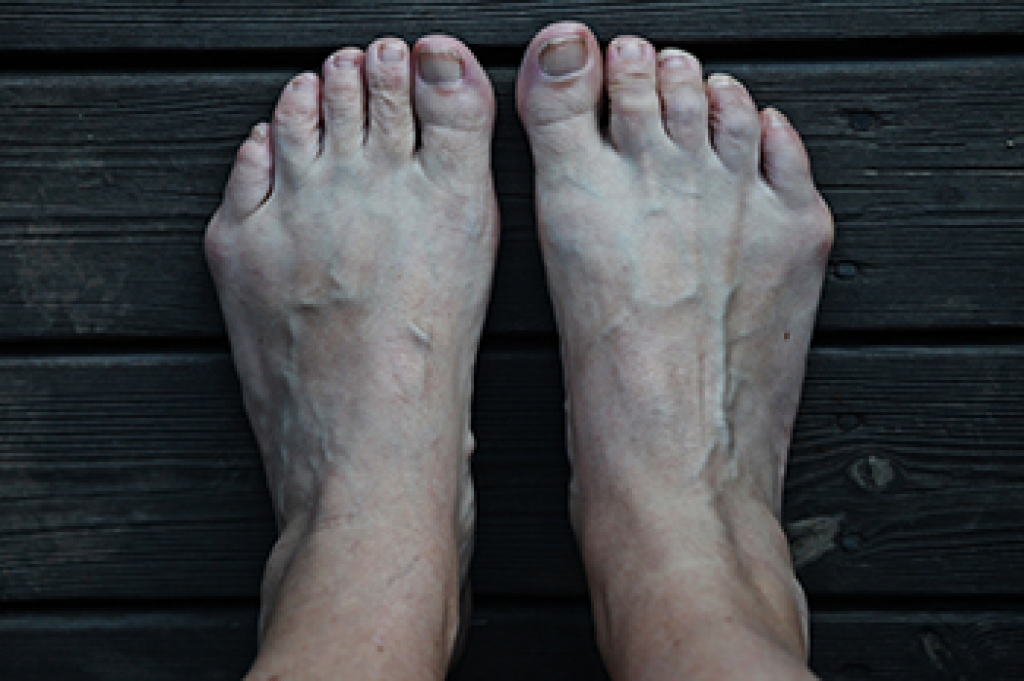
A painful bump near the little toe should not be ignored, especially when shoes press against it. This bump is called a tailor’s bunion, or bunionette. Unlike a bunion at the base of the big toe, it forms along the outer edge of the foot. The long bone behind the little toe becomes more prominent, and the toe sometimes angles toward its neighbor. Although the name suggests a small problem, the resulting pressure can interfere with daily activities. A podiatrist evaluates the underlying bone structure and explains why the bump has developed rather than treating it as a simple skin irritation.
Inherited foot shape plays an important role in tailor’s bunions. Some people have a bone that curves outward or a wider angle between the outer foot bones. These differences increase pressure near the joint of the little toe. Narrow shoes and high heels aggravate the area by crowding the toes. Symptoms include pain, redness, and swelling around the bump. Repeated friction sometimes creates a callus, which is a patch of thickened skin. Discomfort often begins before the deformity becomes obvious. Patients might notice tenderness while walking or difficulty finding shoes that fit comfortably. Persistent symptoms warrant an examination to identify the source of pressure.
A podiatrist begins by asking about the location of pain and how it affects everyday movement. The examination includes checking toe alignment, joint motion, and skin changes. Watching the patient walk helps reveal how weight moves across the foot. X-rays show the position of the bones and help determine the extent of the deformity. They also help distinguish a tailor’s bunion from other causes of a painful lump. Treatment depends on the findings and the patient’s symptoms. A podiatrist provides protective padding to reduce rubbing and prescribes custom orthotics when abnormal foot mechanics contribute to pressure. These shoe inserts redistribute weight across the foot.
Podiatric care focuses on relieving discomfort and protecting the irritated joint. A podiatrist also assesses shoe fit and recommends designs that accommodate the enlarged area. Follow-up appointments help track symptoms and changes in alignment. Non-surgical treatment reduces pressure but does not straighten the underlying bones. When pain continues despite early treatment, a podiatrist discusses surgery to correct the deformity. The decision depends on the bone position and the severity of the problem. Surgery requires a recovery plan geared toward the patient’s health and activity demands. If you have foot pain that involves a tailor’s bunion, it is suggested that you schedule an appointment with a podiatrist for effective relief and management tips.
If you are suffering from bunion pain, contact one of our podiatrists of Palm Beach Foot & Ankle. Our doctors can provide the care you need to keep you pain-free and on your feet.
What Is a Bunion?
Bunions are painful bony bumps that usually develop on the inside of the foot at the joint of the big toe. As the deformity increases over time, it may become painful to walk and wear shoes. Women are more likely to exacerbate existing bunions since they often wear tight, narrow shoes that shift their toes together. Bunion pain can be relieved by wearing wider shoes with enough room for the toes.
Causes
- Genetics – some people inherit feet that are more prone to bunion development
- Inflammatory Conditions - rheumatoid arthritis and polio may cause bunion development
Symptoms
- Redness and inflammation
- Pain and tenderness
- Callus or corns on the bump
- Restricted motion in the big toe
In order to diagnose your bunion, your podiatrist may ask about your medical history, symptoms, and general health. Your doctor might also order an x-ray to take a closer look at your feet. Nonsurgical treatment options include orthotics, padding, icing, changes in footwear, and medication. If nonsurgical treatments don’t alleviate your bunion pain, surgery may be necessary.
If you have any questions, please feel free to contact our offices located in Boynton Beach, Palm Beach Gardens, and West Palm Beach, FL . We offer the newest diagnostic and treatment technologies for all your foot care needs.
