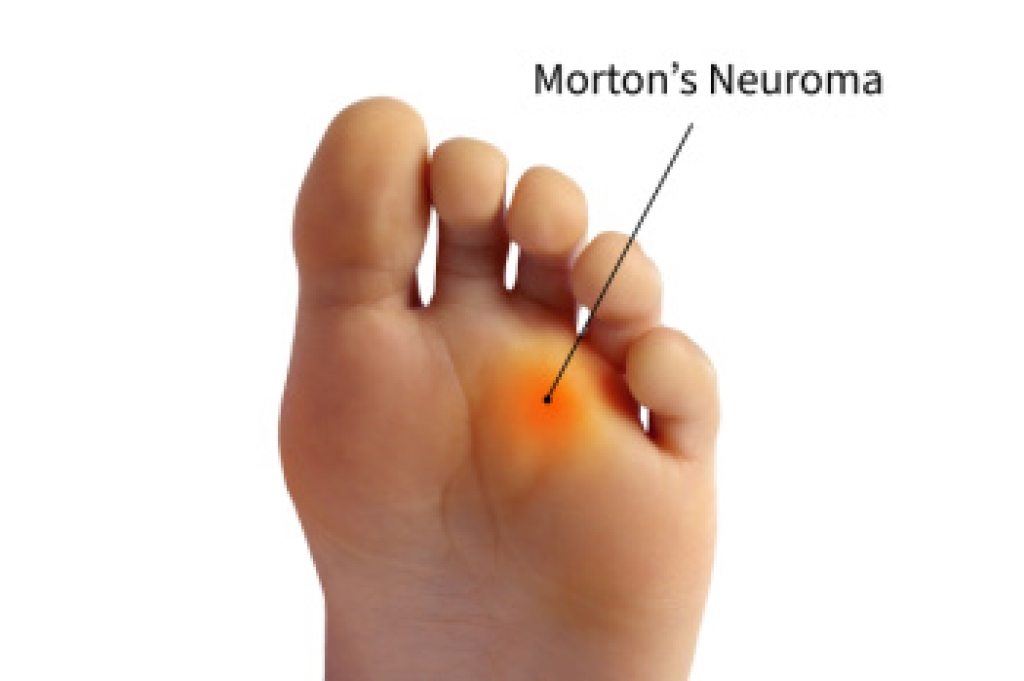
Morton’s neuroma is a painful condition that affects the ball of the foot, most commonly between the third and fourth toes, caused by irritation, compression, or thickening of the tissue around the nerves. It may look like a swelling or simply appear as a normal foot, making visual diagnosis difficult, but many individuals report a feeling of a small pebble under the foot or the sensation of walking on a folded sock. Symptoms include sharp, burning pain, tingling, numbness, or a stabbing sensation in the affected toes, often worsening with tight shoes or prolonged activity. Women are more likely to develop Morton’s neuroma, partly due to wearing narrow or high-heeled shoes that compress the forefoot. A podiatrist can perform a thorough examination, order imaging if needed, and recommend treatments such as custom orthotics, footwear modifications, anti-inflammatory medications, or corticosteroid injections. In severe or persistent cases, minor surgery may be necessary to relieve pressure on the nerve. Early intervention reduces pain and prevents progression. If you experience persistent forefoot pain or tingling, it is suggested that you make an appointment with a podiatrist.
Morton’s neuroma is a very uncomfortable condition to live with. If you think you have Morton’s neuroma, contact one of our podiatrists of Palm Beach Foot & Ankle. Our doctors will attend to all of your foot care needs and answer any of your related questions.
Morton’s Neuroma
Morton's neuroma is a painful foot condition that commonly affects the areas between the second and third or third and fourth toe, although other areas of the foot are also susceptible. Morton’s neuroma is caused by an inflamed nerve in the foot that is being squeezed and aggravated by surrounding bones.
What Increases the Chances of Having Morton’s Neuroma?
- Ill-fitting high heels or shoes that add pressure to the toe or foot
- Jogging, running or any sport that involves constant impact to the foot
- Flat feet, bunions, and any other foot deformities
Morton’s neuroma is a very treatable condition. Orthotics and shoe inserts can often be used to alleviate the pain on the forefront of the feet. In more severe cases, corticosteroids can also be prescribed. In order to figure out the best treatment for your neuroma, it’s recommended to seek the care of a podiatrist who can diagnose your condition and provide different treatment options.
If you have any questions, please feel free to contact our offices located in Boynton Beach, Palm Beach Gardens, and West Palm Beach, FL . We offer the newest diagnostic and treatment technologies for all your foot care needs.
